











Key Facts & Conclusions
OD VS OS: OD = Right Eye (Oculus Dexter), OS = Left Eye (Oculus Sinister) - Standard Latin abbreviations on all eye prescriptions.
Prescription Structure: OD/OS label columns for SPH (nearsightedness/farsightedness), CYL (astigmatism degree), and AXIS (astigmatism angle 1-180°).
Asymmetric Vision Essential: OD/OS ensures accurate correction when eyes have different prescriptions (common in astigmatism).
Online Ordering Requirement: Must verify OD/OS when entering prescription data on eyewear sites (e.g., ZEELOOL) to avoid errors.
This article explains OD vs. OS, what the terms stand for, where you find them on your prescription, and why it all matters. We’ll also cover some other commonly used eye prescription abbreviations and include a quick summary table that will make it easier for you to interpret your vision report. And by the end, you will be better prepared to take on your next trip to the eyewear store or optometrist.
What Does OD vs OS in Eye Prescriptions Mean?
And the abbreviations OD and OS are standard on virtually all eye prescriptions, and they’re simple but useful. OD means “Oculus Dexter” or “right eye” in Latin, and OS means “Oculus Sinister” or “left eye.” In the field of optometry, these are the terms in current use, as they are more precise and clearer than their predecessors, which were medical terms.
Occasionally you’ll see “OU,” which stands for “both eyes.” While some doctors and clinics are moving toward rendering such terms in plain English, such as “right” and “left,” OD and OS still represent the standard in the industry—including printed or formal prescriptions. This eliminates confusion across languages and medical systems.
Each segment of your eye prescription represents the precise correction required for each eye. When you see your eye doctor, the office labels your eye measurements OD and OS, ensuring that your eye doctor isn’t confused when making your lenses—such as if your left and right eyes need differing prescriptions. This difference becomes especially significant for those with asymmetric vision or astigmatism in one of their eyes.

Where You’ll See OD and OS: Reading Your Eye Prescription
You will most commonly see OD and OS on the prescription slip you get after an eye exam. Generally, the prescription is tabulated with rows for SPH, CYL, AXIS, etc., and separate columns for OD and OS for each of the right and left eyes. Each is associated with a specific prescription required to update your view of the world.
An example prescription might read: OD: SPH – 2.00 CYL – 0.50 AXIS 180 OS: SPH – 1.75 CYL – 0.25 AXIS 160 You can see that, for your right eye (OD), you need slightly more correction than your left eye (OS), and both have some astigmatism to a small degree.
These values are essential for crafting customized lenses that offer the best in clarity and comfort. Ordering eyeglasses online, as is the case with most of ZEELOOL's eyeglasses, presents a prompt to enter in the prescription values for your left and right eyes.
Mistaking OD vs. OS can cause catastrophic issues. Just imagine if your prescription indicates different numbers for each eye, and you mixed them up when ordering glasses on the internet: the lenses would not function as planned. It can also lead to double vision, headaches, or even dizziness.
This is also useful when looking at prior prescriptions. As your eye doctor updates your vision correction over time, recognizing which values changed—and for what eye—enables a fuller understanding of how your vision is changing. If you ever want a second opinion or a new provider to take over your prescription, just knowing this would be critical.
What Does Each Term on Your Eye Prescription Mean?
SPH (Sphere): Nearsightedness and Farsightedness
Indicates the lens power needed for nearsightedness (-) or farsightedness (+). It is the most fundamental part of your prescription.
CYL (Cylinder): Measuring Astigmatism Severity
Measures the degree of astigmatism caused by an unevenly curved cornea, which results in blurry vision. ZEELOOL standards ensure these values are handled with precision for visual clarity.
AXIS: The Orientation of Your Astigmatism Correction
A number from 1 to 180 that defines the orientation of your astigmatism correction. It works alongside CYL to adjust the shape of your polished lenses.
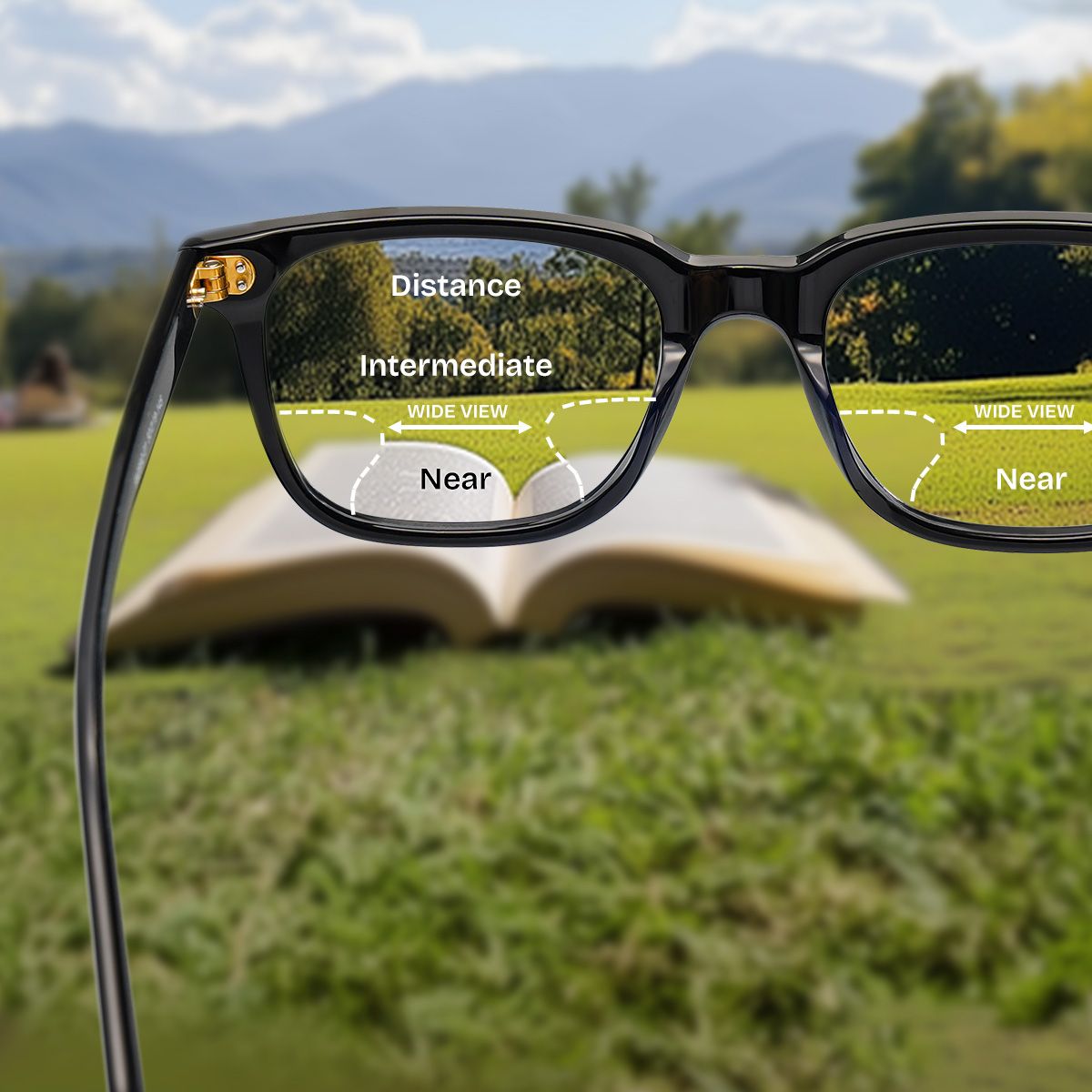
ADD (Addition): Extra Power for Reading and Progressive Lenses
Provides extra magnifying power at the bottom of the lens for reading. A must-have for chic multifocal or progressive lenses.
PD (Pupillary Distance): Centering Your Lenses on Your Eyes
The distance between your pupils in millimeters. This ensures the optical center of your lenses aligns perfectly with your eyes for a true-to-scale fit.
PRISM and Base: Correcting Eye Alignment Problems
A prism prescription appears on your prescription only if your eyes have trouble working together—a condition called "binocular vision dysfunction," which can cause double vision, eye strain, or difficulty reading. Unlike SPH or CYL, which correct focus, prism corrects the direction each eye points.
Prism is measured in prism diopters (Δ) and always comes with a base direction—Base In (BI), Base Out (BO), Base Up (BU), or Base Down (BD)—which tells the lab which edge of the prism should be the thickest. Most people do not have a prism value on their prescription; its presence indicates a specific alignment condition diagnosed by your optometrist.
OD vs OS: Quick Summary Table
To make everything easier to remember, here’s a quick reference table summarizing the key meanings of OD and OS, along with other related terms:
| Term | Full Form | Meaning | Application |
| OD | Oculus Dexter | Right Eye | Prescription data for the right eye. |
| OS | Oculus Sinister | Left Eye | Prescription data for the left eye. |
| OU | Oculus Uterque | Both Eyes | Used when both eyes have the same values. |
| SPH | Sphere | Lens power for nearsightedness or farsightedness | Corrects basic vision needs. |
| CYL | Cylinder | Astigmatism correction | Shapes the lens for clear vision. |
| AXIS | — | Orientation of astigmatism | Used with CYL in astigmatism correction. |
| ADD | Addition | Magnification for reading | Used in chic multifocal or progressive lenses. |
| PD | Pupillary Distance | Distance between pupils | Aligns lenses properly for visual clarity. |
| PRISM | — | Corrects image alignment | Treats double vision for a polished experience. |
This table serves as a helpful tool whenever you review your prescription or prepare to order eyeglasses online. Keep it bookmarked or saved, especially if you frequently shop for eyewear or help others understand their eye prescriptions.
OD vs OS: Frequently Asked Questions
Q: Is OD the right eye or the left eye?
A: OD stands for Oculus Dexter, Latin for "right eye." OS stands for Oculus Sinister, Latin for "left eye." A simple memory aid: "Dexter" shares its root with "dexterity," historically associated with the right hand.
Q: What does OU mean on an eye prescription?
A: OU stands for Oculus Uterque, meaning "both eyes." It appears when a measurement—most commonly PD or ADD—applies equally to both eyes, so the optometrist writes a single value under OU rather than repeating it under OD and OS separately.
Q: Why does my prescription have numbers for one eye but not the other?
A: This is normal. If only one eye has astigmatism, the CYL and AXIS fields will be filled in for that eye and left blank (or marked "DS" for Distancia Sphaerica) for the other. A blank CYL field means that eye has no measurable astigmatism and only needs a spherical correction.
Q: Can I use my glasses prescription to order contact lenses?
A: No. Glasses prescriptions and contact lens prescriptions are not interchangeable. Glasses sit approximately 12 mm from your eye, while contacts rest directly on the cornea—this difference in distance changes the effective lens power needed. Contact lens prescriptions also include two additional measurements: base curve (BC), which must match the curvature of your cornea, and diameter (DIA), which determines how the lens fits on your eye. Always obtain a separate contact lens fitting from your optometrist.
Conclusion
If you know what OD vs. OS means, the complexity of the eye prescription world starts to make sense. These abbreviations simply describe your right and left eyes, but they are pretty important in ensuring the eyeglasses you get are tailored to your personal vision. Once you understand how to read these terms and what they all mean, in addition to related measurements such as SPH, CYL, and AXIS, you’ve taken an important step toward better eye care and informed eyewear decisions.
CTA
Now that you know all about OD vs. OS and how to read your prescription accurately, it’s time to find the right pair of glasses to suit your style and vision needs. ZEELOOL USA has curated a collection of trendy, functional, and fashionable eyeglasses that are just right for you, including women's glasses, men's glasses, kids' glasses, and reading glasses. See better. Look smarter. Feel confident. Use our AR try-on with real-time rendering to visualize your next statement piece and enjoy an unbeatable price on high-quality lenses. Ready to see the difference? Try before you buy and get the best bang for your buck today!